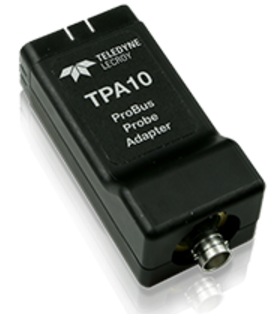
You design the future. We help you make it happen.
Teledyne LeCroy - Probe Adapters
Probe adapters provide simple and easy interface of third-party probes as well as change between the different Teledyne LeCroy Oscilloscope input and cable types (ProBus, ProLink, K/2.92 mm, BNC and SMA). Depending on the adapters, changing between the Teledyne LeCroy Oscilloscope's input type may have an effect on the overall performance of the channel.
|
Products |
|
|---|---|
|
TekProbe to ProBus Probe Adapter |
|
|
ProLink to 2.92mm Adapter with Probe Power and Communication Pass Through |
|
|
ProLink to 2.92mm ProAxial Adapter with Probe Power and Communication Pass Through |
|
|
2.92mm to ProBus Adapter with Probe Power and Communication Pass Through |
|
|
2.92mm to ProLink Adapter with Probe Power and Communication Pass Through |
|
Document
Document
More Product Information
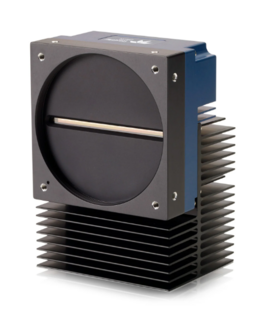
- High speed up to 100 kHzx3 line rate (Mono) or 300 kHz line rate (Color)
- RGB native colors (Color)
- Independent exposure control (Color)
- Subpixel spatial correction (Color)
- Sequential exposure control (Mono)
- High dynamic range (Mono)
- Up to 100 m optical cable length
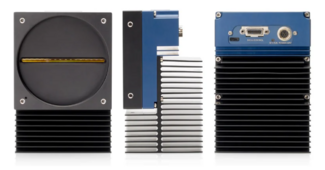
The all new Linea HS™ delivers line rates up to an incredible 400 kHz at 32k resolution — over 13 Gpixels/sec via CLHS interface. With up to 128 TDI stages (plus an extra 64 in HDR mode) for unmatched sensitivity and incredibly low noise, Linea HS excels in the highest speed, lowest light applications.
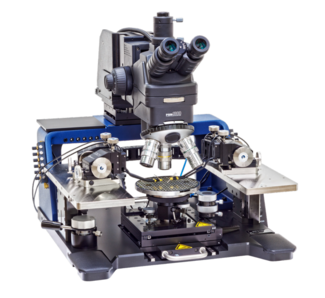
Flexibility
- Ideal for a wide range of applications such as RF, mm-Wave and sub-THz characterization, FA, DWC, MEMS, optoelectronic tests and WL
- Re-configurable and upgradable as requirements grow
- Minimizes setup times with no loss in performance or accuracy
- Seamless integration of various measurement instruments
Stability
- Solid station frame
- Built-in vibration-isolation solution for superior vibration attenuation
- Rigid microscope bridge
- Compact and rigid mechanical design
- Highly accurate measurement results
- Incorporates best-known methods
Ease of Use
- Ergonomic and straightforward design for comfortable and easy operation
- Low-profile design
- Simple microscope operation
- Quick and ergonomic change of DUT through pull-out stage
- Minimize training efforts
- Fast time to data
- Convenient operation
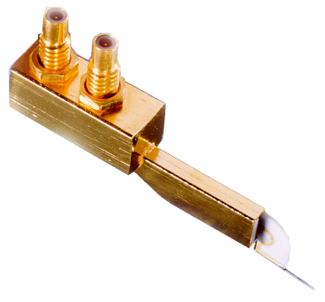
- Ultra-low, fA-level current and fF-level capacitance measurements from -65 °C to + 300 °C
- Guarantees fully-guarded measurements to fA and fF levels
- Individual connectors provide force-sense connection for quasi-Kelvin and CV measurements
- Allows probing of different pad materials and sizes
- Fast replacement of worn probes without the need for tools
Measurement Accuracy
- Best solution for high accuracy IV/CV, low-noise and 1/f measurements with PureLine, AutoGuard and next generation MicroChamber technologies
- Minimize AC and spectral noise with effective shielding capability
- Achieve unsurpassed RF/mmW measurement and calibration accuracy with integrated RF tools and WinCal
- Shortest signal path test integration for accurate, thermally stable, and low-error data collection
See "Specifications & Details" tab for more key features
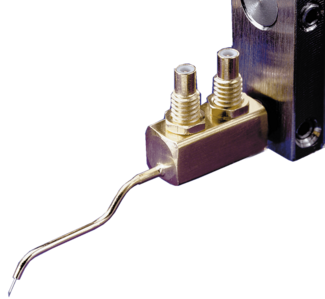
- High-quality construction with low-noise electrical performance
- Kelvin version for convenient 4-point measurements
- Replaceable coaxial probe tips, with choice of tip radii, and full electrical guard to the probe tip
- SSMC 50 connectors
- Ultra-low, fA and fF measurements from -65 º C to 150 º C
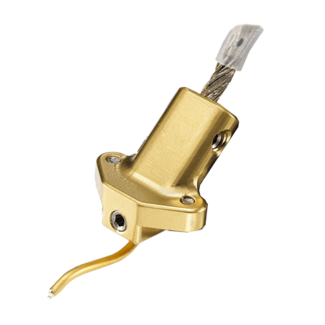
- Enables wafer probing up to 100 A pulsed and 10A DC
- Innovative multi-fingertip design provides even distribution of current
- Supports up to 500 V
- Replaceable Tungsten probe tips
- Temperature range of -60°C to 300°C
- Minimal contact resistance at the pad-tip junction to reduce heating during measurements, with fewer probe marks
- Prevents against thermal runaway
- Measure devices on wafer at higher currents than ever before
- Small scrub minimizes damage to aluminum pad
- Small footprint – tip fits on a 1 mm pad
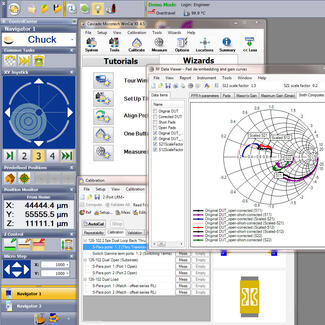
All tools in one belt
- Calibration
- Validation
- Measurement
- Analysis
Advanced functionality
- Multi-Port Hybrid Cals
- Enhanced Verification and Reports
- Post Processing and Sequencing
Get started
- Guided wizards and multimedia tutorials integrated
- Intelligence in setups
Flexible setups
- Standalone for manual probe stations
- Fully integrated in Velox Probe station control software
- Workspaces to build custom configurations that include selected combinations of system setup files, calibration setup files, and reports
- Support of more than 24 of the most common VNA’s
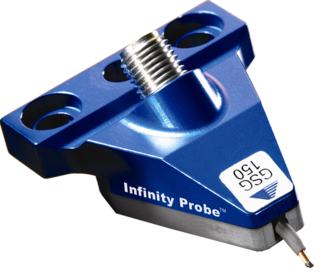
- Lithographic thin-film construction
- Excellent crosstalk characteristics
- Non-oxidizing nickel alloy tips
- Innovative force delivery mechanism
- 40GHz, 50GHz, 67GHz, 110GHz and 145GHz connectors available
- GSG, SG, GS, GSGSG, GSSG, SGS configurations
- 50 to 250 µm pitches (other pitches available on request)
- High current version (2 A) available
Advantages
- Superior field confinement reduces unwanted couplings to nearby devices and transmission modes
- Superior measurement accuracy and repeatability
- Small scrub minimizes damage to aluminum pad
- Typical contact resistance < 0. 05 Ω on Al, <0.02Ω on Au
- Save valuable wafer space and reduce pad parasitics by being able to shrink pad geometries to 25 x 35 µ m (best case)

Teledyne LeCroy
Website
12bit MSO's 40 Mhz to 100 GHz, Probes, Series Network & Logic Analyzers