

You design the future. We help you make it happen.
Zebra’s acquisition of Matrox® Imaging expands our industrial automation portfolio to support basic track-and-trace applications to complex inspection, recognition and guidance tasks. Streamline how you qualify, procure and deploy solutions with an interoperable portfolio for all your vision needs.
Scale Up As Your Business Grows
Zebra delivers the widest available ecosystem of machine vision products and fixed industrial scanners. Scale up and across portfolios with ease by adding on complimentary hardware or a software license. Our flexible machine vision portfolio grows with your business, so you can effortlessly leverage vision technology to boost yields, lower costs, and enhance regulatory compliance.
Do More With a Smaller Footprint
Modular machine vision and fixed scanning components let you right-fit your solution—and growth. Our intuitive software is easier to use and our systems require less hardware to implement. Adapting an existing automation system? Zebra’s portfolio interoperates widely with third-party components so you can drive down time to install, acquire and deploy your vision.
Future-Proof Your Vision
Zebra is an automation leader who understands how to protect your business, today and beyond. Our interoperable automation portfolio and product designs adhere to and adapt with industry standards to future-proof your investments.
Contact Details
Zebra Technologies Corporation - Headquarters
475 Half Day Rd, Lincolnshire, IL 60069, USA
Phone: 514-822-6000
Imaging/Machine Vision
Download Line Card
Products
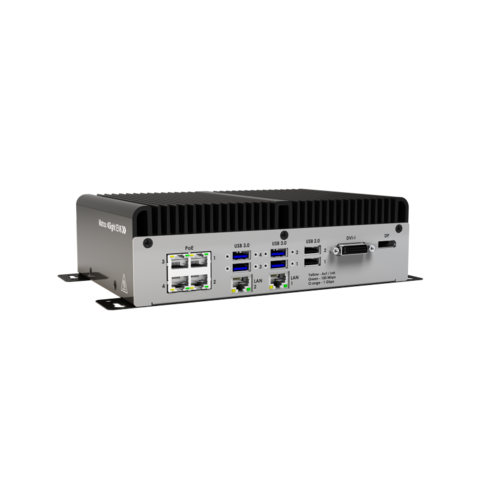
- Reduce service stoppages with a fanless design
- Inspect multiple sites through the support for four GigE Vision and four USB3 Vision cameras
- Simplify cabling for GigE Vision installations using Powerover-Ethernet (PoE)-enabled ports
- Tackle deep learning and traditional machine vision applications with a mobile-class embedded twelfth-generation Intel Core processor
- Connect separately to the factory floor and enterprise networks via two more Gigabit Ethernet ports
- Synchronize with other equipment using the integrated real-time digital I/Os with rotary encoder support and RS-232/RS-485 ports
- Streamline application development using the Aurora Design Assistant flowchart-based IDE or the Aurora Imaging Library SDK
- Tackle machine vision applications with utmost confidence using field-proven tools for analyzing, locating, classifying, measuring, reading, and verifying
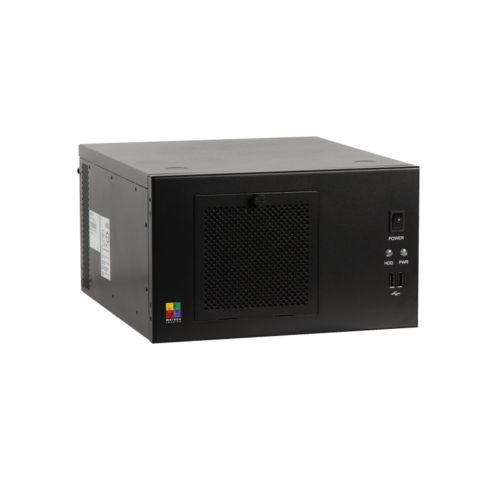
- Tackle demanding imaging applications using an eighth-generation Intel Core processor
- Capture directly from GigE Vision® and USB3 Vision® cameras
- Broaden support for Camera Link® , CoaXPress® , DisplayPort, HDMI, and SDI video interfaces using Zebra frame grabbers
- Customize I/O capabilities through four PCIe slots accepting full-height, half-length cards
- Install in space-limited industrial environments given its small footprint and rugged design
- Streamline application development using the Aurora Design Assistant flowchart-based IDE or the Aurora Imaging Library SDK
- Tackle machine vision applications with utmost confidence using field-proven tools for analyzing, locating, classifying, measuring, reading, and verifying
- Leverage machine learning including deep learning to categorize image content
- Ready for deep learning training with suitably equipped and configured model
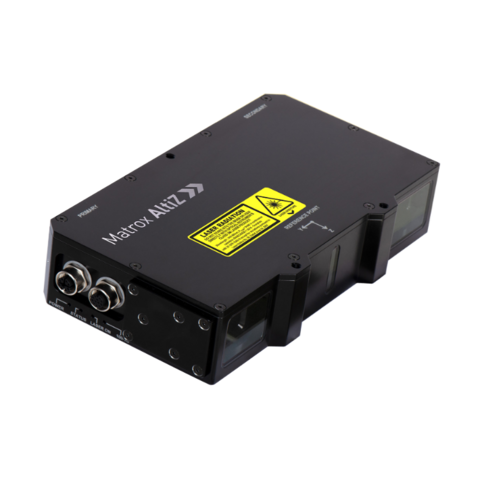
- Leverage dual-camera single-laser design to deliver exceptionally high 3D reproduction fidelity
- Scan scenes quickly with profiling rates of up to 11,000 per second
- Gain from unique embedded algorithms to generate consistent profiles, depth maps, or point clouds
- Benefit from truly standard GigE Vision® interface to work directly with Zebra Imaging and third-party vision software
- Simplify cabling with Power-over-Ethernet (PoE) support
- Deploy confidently in tough industrial settings thanks to a solid IP67-rated2 aluminum housing and M12 connectors
- Benefit from several fastening points to facilitate fixing one or more sensors to gantries and robots
- Streamline sensor setup and verification via the Aurora Capture Works utility for Windows® and Linux®
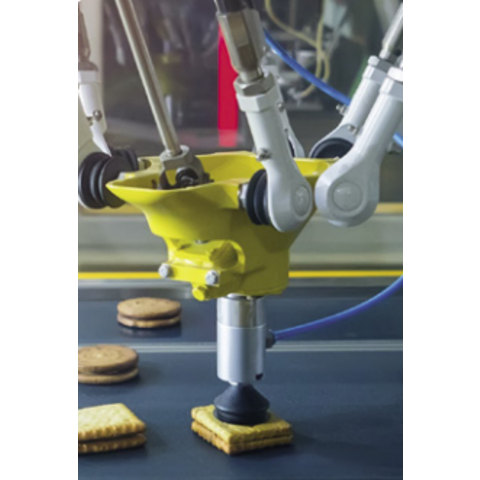
- Solve machine vision applications efficiently by constructing flowcharts instead of writing program code, using field-proven tools for analyzing, classifying, locating, measuring, reading and verifying
- Use a single program for creating both application logic and operator interface
- Leverage deep learning for visual inspection through image classification and segmentation tools
- Rely on a common underlying vision library for the same results with an Iris GTX smart camera, vision systems or third-part computer
- Work with multiple cameras all within the same project or per project running concurrently and independently from one another, platform permitting
- Interface to Zebra AltiZ and third party 3D sensors to visualize, process and analyze depth maps and point clouds
- Communication options include discrete Zebra I/Os, RS-232, and Ethernet (TCP/IP, CC-Link IE Field Basic, EtherNet/IP, Modbus, OPC UA, and PROFINET, and native robot interfaces)
- Maximize productivity with instant feedback on image analysis and processing operations
- Receive immediate pertinent assistance through an integrated contextual guide
- Maintain control and independence through the ability to create custom flowchart steps
- Test communication with PLC using the built-in PLC interface emulator
- Protect against inappropriate changes with the Project Change Validator tool
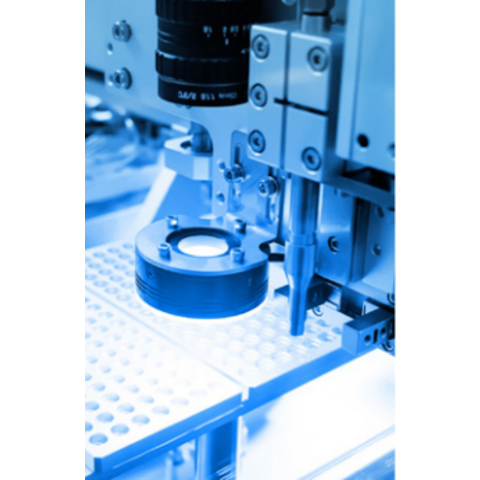
- Solve applications rather than develop underlying tools by leveraging a toolkit with a more than 25-year history of reliable performance
- Tackle applications with utmost confidence using field-proven tools for analyzing, classifying, locating, measuring, reading and verifying
- Base analysis on monochrome and color 2D images as well as 3D profiles, depth maps and point clouds
- Harness the full power of today's hardware through optimizations exploiting SIMD, multi-core CPU and multi-CPU technologies
- Support platforms ranging from smart cameras to HPCs via a single consistent and intuitive API
- Obtain live data in different ways with support for analog, Camera Link, CoaXPress, DisplayPort, GenTL, GigE Vision, HDMI, SDI, Linux and USB3 Vision Interfaces
- Maintain flexibility and choice by way of support for 64-bit Windows and Linux along with Intel and Arm processor architectures
- Leverage available programming know-how with support for C, C++, C+ and CPython languages
- Experiment, prototype and generate program code using Aurora Imaging Library CoPilot interactive environment
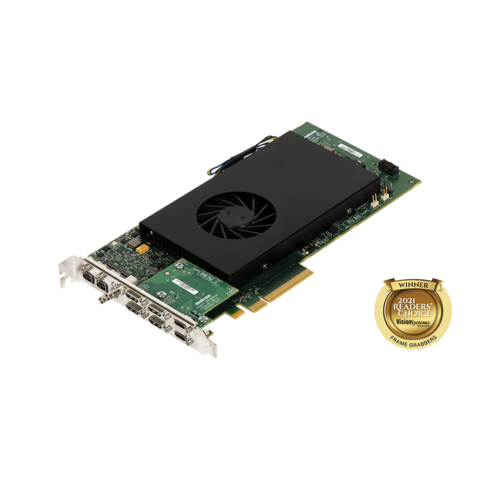
- Capture from legacy to the latest video sources through support for SD analog to UHD digital formats
- Connect and switch between different video sources via Mini DisplayPort, HD-BNC, HDMI, and custom analog DVI1 connectivity
- Handle multiple video sources with the simultaneous capture of up to eight HD or two UHD streams2
- Optimize video transmission and storage through onboard multi-stream H.264 encoding
- Minimize system footprint by way of a single-slot PCIe card design
- Simplify application development using the Aurora Imaging Library, formerly Matrox Imaging Library (MIL), software development kit (SDK)
- Deploy on a current platform of choice with support for 64-bit Windows® 7/10 and Linux
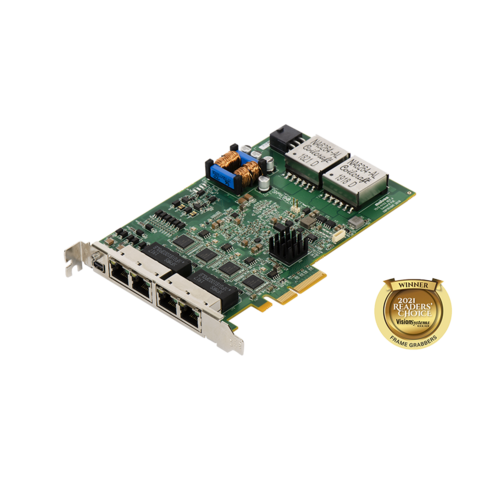
- Simplify cabling between cameras and vision computer through PoE support
- Facilitate multi-camera configurations with two or four Gigabit Ethernet ports
- Trigger multiple cameras simultaneously and reliably using hardware-assisted trigger-over-Ethernet (ToE)
- Synchronize to automation devices in real-time through digital I/Os with hardware-assisted management
- Deploy pre-licensed for GigE Vision support in Aurora software, formerly Matrox Imaging Software
- Avoid the need for a separate hardware key through a license fingerprint for additional Aurora software features
- Certified for use with GigE Vision systems
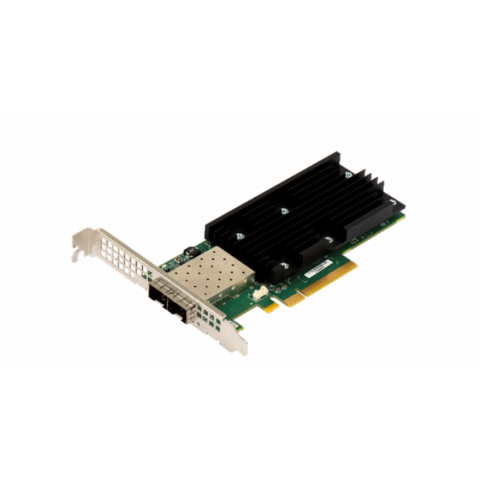
- Reliably and efficiently acquire at up to 25 Gigabit/s per port through onboard packet processing
- Maintain maximum flexibility with support for generic GigE Vision cameras
- Readily and cost-effectively support multi-camera setups through two ports, together capable of handling up to 32 cameras
- Cater to a range of cabling needs with support for copper and fiber-optic Ethernet cabling
- Directly license Aurora software, formerly Matrox Imaging Software, with integrated license fingerprint and storage
- Monitor and troubleshoot acquisition performance in detail using Aurora Gecho event-logging tool
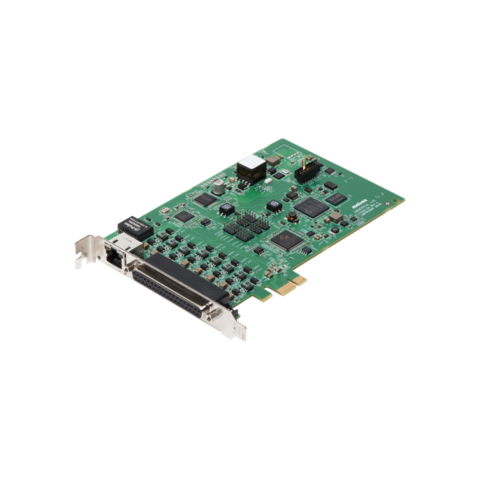
- Facilitate computer integration with a PCIe® x1 interface
- Benefit from real-time synchronization with 16 discrete digital I/Os
- Get straightforward access to I/Os via standard D-Sub connector
- Support factory-floor and lab use with 24 V and TTL-compatible signaling
- Protect against unintended use with optical isolation and resettable fuses
- Track moving production lines with support for two rotary incremental encoders
- Use status indicator LED for each I/O to assist with integration troubleshooting
- Leverage Gigabit Ethernet port for industrial communication or video capture using GigE Vision
- Use with Zebra Aurora Design Assistant (formerly Matrox Design Assistant) and Zebra Aurora Imaging Library (formerly Matrox Imaging Library), vision software
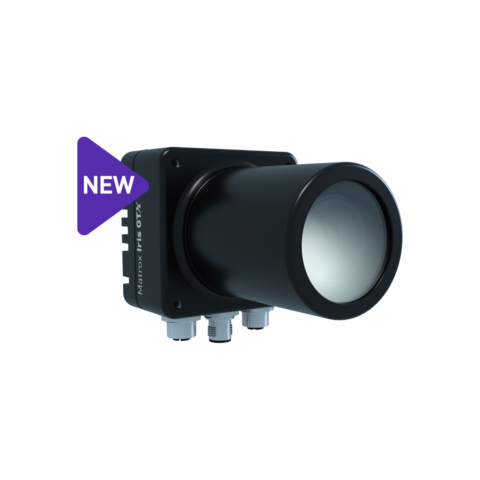
- Boost performance by up to 3x over its precursor thanks to an Intel x6000 series embedded processor
- Capture high-resolution images at high speed through a choice of CMOS sensors from two to 16 Megapixels
- Deploy in dirty, humid, or harsh industrial environments by way of a compact IP67-rated design
- Communicate actions and results to other automation and enterprise equipment via real-time digital I/Os, and Ethernet (TCP/IP, CC-Link IE Field Basic, EtherNet/IP™2, Modbus® , PROFINET® , and native robot interfaces)
- Handle Human-Machine Interface (HMI) function by way of VGA and USB connectivity
- Simplify vision setup and upkeep via integrated lens focusing and illumination intensity control
- Synchronize to the manufacturing line through the support for incremental rotary encoders
- Solve machine vision applications efficiently with Aurora Design Assistant by constructing flowcharts instead of writing program code
- Maintain control and independence through the ability to code custom flowchart steps
- Tackle machine vision applications with utmost confidence using field-proven tools for analyzing, locating, classifying, measuring, reading, and verifying
- Leverage deep learning for visual inspection through image classification and segmentation tools
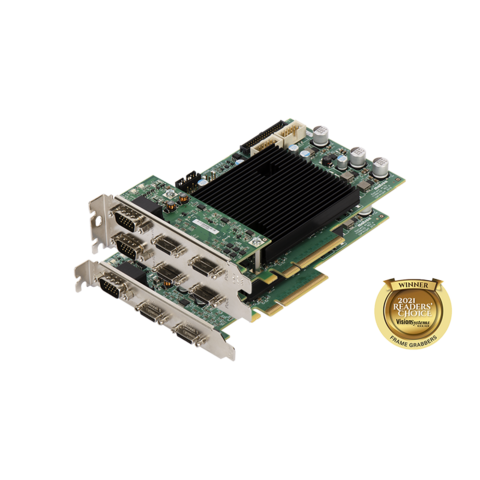
- Support the most high-performance Camera Link cameras with available support for Full and 80-bit mode at up to 85 MHz
- Perform deterministic image acquisition by way of the jitter-free Camera Link 2.1 interface
- Maximize system compatibility with the choice of PCIe® 2.1 x1, x4 or x8 connectivity
- Eliminate missed frames with ample onboard buffering and PCIe bandwidth
- Optimize multi-camera applications via support for up to four Base or two Full/80-bit Camera Link cameras per board
- Minimize space requirements and maximize PC compatibility through a half-length design with mini Camera Link connectivity for true single-slot operation
- Improve and simplify system connectivity with Power-overCamera-Link (PoCL) support at extended cable lengths
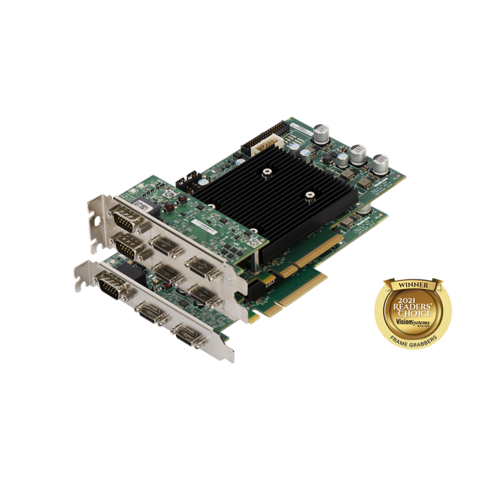
- Support the most high-performance Camera Link cameras with available support for Full and 80-bit mode at up to 85 MHz
- Perform deterministic image acquisition by way of the jitter-free Camera Link 2.1 interface
- Offload host computer of custom image processing using a field-programmable gate array (FPGA) device
- Eliminate missed frames through a PCIe® 2.0 x8 host interface and ample onboard buffering
- Optimize multi-camera applications via support for up to four Base or two Full/80-bit Camera Link cameras per board
- Minimize space requirements and maximize PC compatibility through a half-length design with mini Camera Link connectivity for true single-slot operation
- Improve and simplify system connectivity with Power-overCamera-Link (PoCL) support at extended cable lengths