
You design the future. We help you make it happen.
Safran DSI Testing & Telemetry provides complete, end-to-end solutions covering instrumentation, mission systems, onboard recording, and transmission, through to base stations for data monitoring and control. Our solutions are platform-agnostic and adaptable to customer mission needs.
Our instrumentation and telemetry turnkey solutions support both mobile and stationary systems. These include, but are not limited to, data acquisition units (DAUs), onboard recording, ground receiving, recording, and data processing applications for fixed- and rotary-wing aircraft, manned and unmanned systems, eVTOL aircraft, as well as missile systems and space launchers. Our telemetry solutions provide centralized monitoring and control of telemetry infrastructure worldwide. Our antennas and receivers form the backbone of multiple future range locations and can be deployed in fixed, mobile, or transportable configurations.
Safran DSI also offers comprehensive Data Management solutions for operational aircraft, enabling ISR, Search & Rescue, mission data loading, and transfer, as well as pilot training and debriefing.
Contact Details
Safran Defense & Space, Inc.
3005 Business Park Drive, Norcross, GA 30071, USA
Phone: 770-753-4017
Test & Measurement
Download Line Card

Products
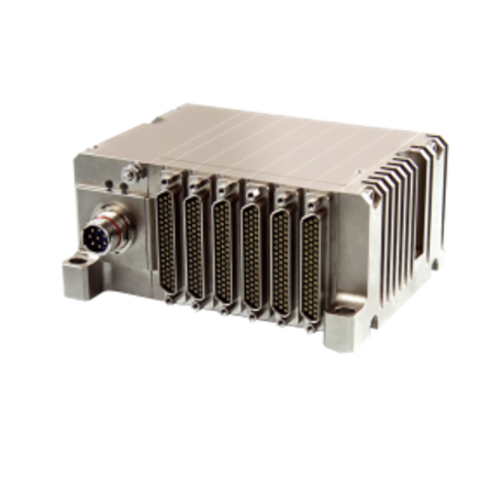
- Designed for Harsh Environments: – 50°C / +105°C, Waterproof, Shocks, Vibration, Lightning, EMI/EMC
- Ultra Compact: Generic analog module, 2×3’’ / 51×76 mm, from 1 to 16 modules per stack
- Best Data Ever: 500 ppm in extreme temperature range
- Easy to Configure: eZ software Suite, XML schema (MDL)
- INET Ready: UDP communication, IEEEE1588 synchronization, SNMP
- Multi Format Output Stream: PCM Chapter 4, Chapter 7, Chapter 10, UDP, IENA, DAR
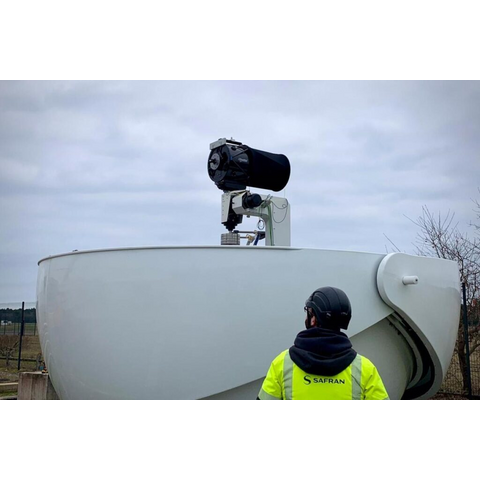
- Multi-Missions and Applications: Earth Observation (EO), high throughput bi-directional telecommunication, feeder link or Deep Space
- 100% Safran In-House Solution: Compatible with SDA, CCSDS and HPE standards
- Communication Data Rates: 10 to 100 times higher thanks to Cortex Lasercom
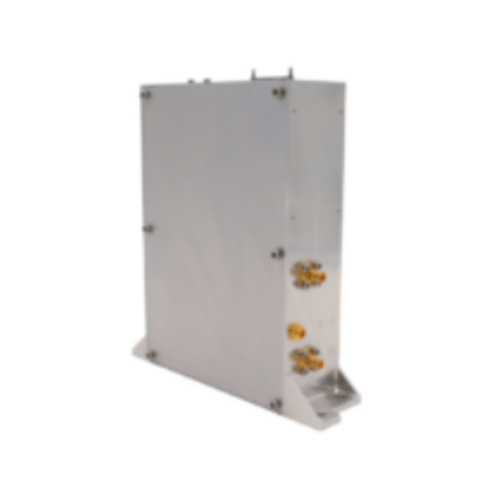
- Compact Design: Ideal for mini and micro satellites
- Long Lifetime: 7 year-lifetime in Low Earth Orbit missions
- COTS Design: Radiation tested and hardened, ITAR free
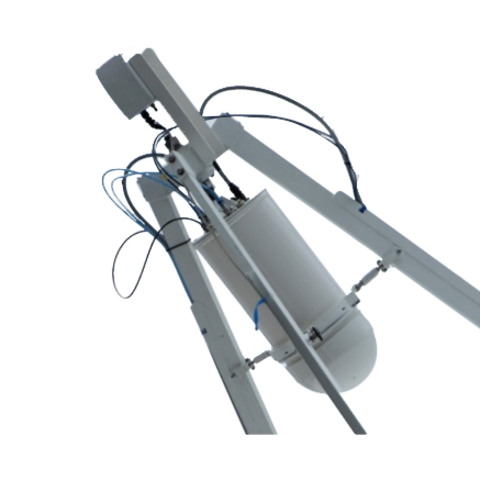
- LTE/4G Mitigation: LTE/4G, WCS & Customized Rejection Filters (Upgradable During Antenna Lifetime)
- Easy Integration: Tri-Band even with Dishes as Small as 6’/1.8m
- SCM 1000 Hz Scan Rate: Highest Accuracy of Tracking
- No RF-Band Compromise: Concentric 3-Band Feed, without need of Dichroic Filter
- Modular L - S or C-Band: Simple Add-On upgrade without any Structural Change
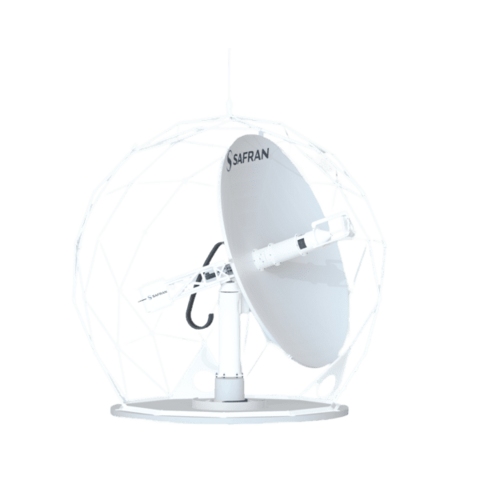
- Tri-Band S/X/KA: The best ratio of miniaturization/performance in any configuration
- AutoTrack S-Band: Supports any kind of operation
- Simultaneous Dual-Pol: For S, X and Ka-Band
- Earth Observation/Satellite Constellations: Meet your requirements
- Radome Covered: Maximum sustainability for any environment
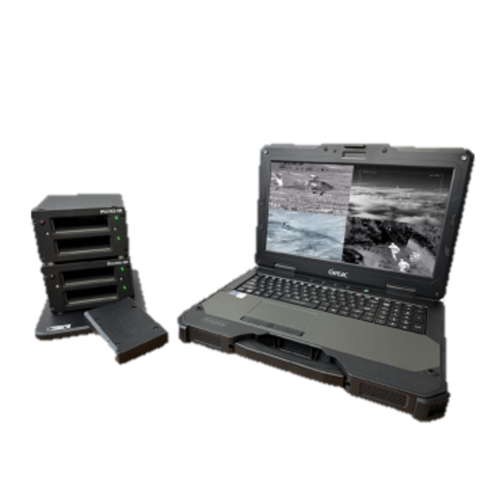
- Preparation and Post-Mission Data Retrieval and Replay
- IRIG-106 CH10 Data Replay and Configuration of Display
- Simultaneous Replay of up to 4 Cartridges for Mass Debriefing
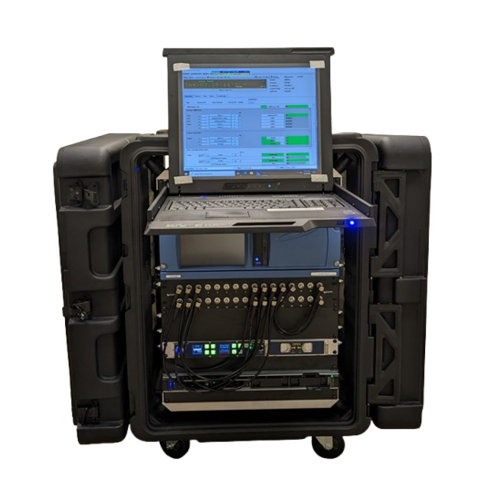
- RTR-X4 Telemetry Receiver: Full Flexibility of Configurations, including full band visibility, and optional RF recording
- DQM/DQE: Embedded Data Quality Metrics / Encapsulation compatible with BSS
- HEIM GMDR Chapter 7: Telemetry System for Data Acquisition, Recording and Playback
- Ch. 10 & IRIG218-20 Output: Easy and Modern UDP Data Spreading
- Dell Power Edge R250 Server: Intuitive GUI, Keyboard and Touchpad for Full and Easy Direct Control
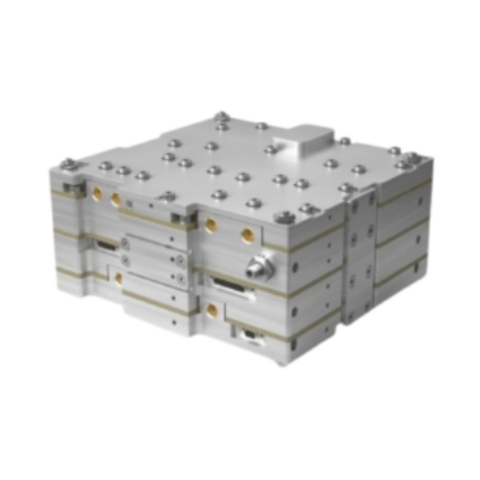
- Proven Design: Designed for New Space with radiation tested and hardened
- Multi-Constellation: GPS, GALILEO, Beidou
- Long Lifetime: 2-5 year-lifetime in Low Earth Orbit (LEO) Missions
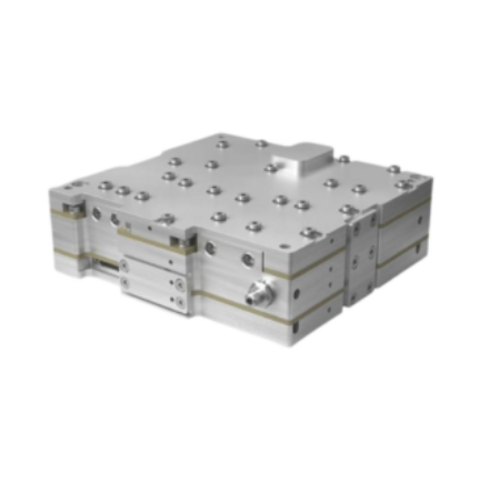
- High Reliable New Space Design
- 5 Year Life-Time LEO Missions
- Multi-Constellation (GPS, GALILEO, BeiDou, & GLONASS) / GALILEO Autonomous
- In-Flight Firmware Uploading
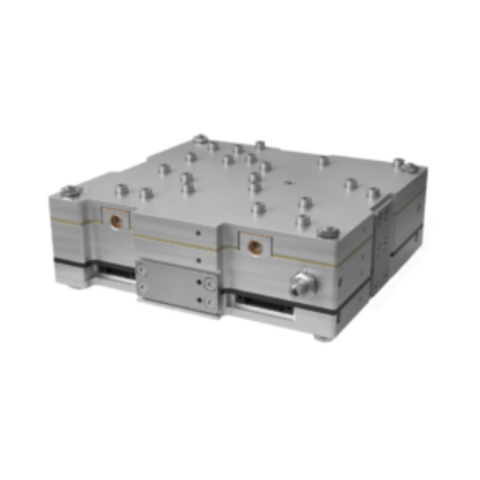
- Proven Design: COTS design optimized for New Space
- Long Lifetime: 5-year lifetime
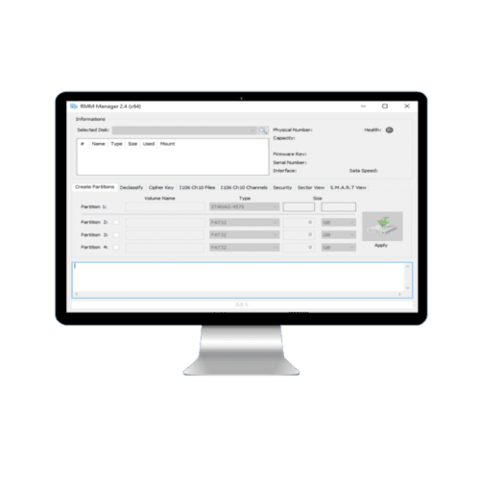
- Easy-to-Install Windows 10 Utility
- User-Friendly Menu-Driven Operation: MILSTD-1553B (MT/RT), ARINC429, RS422
- ARINC-717 Compliant

- Ultra-Low Swap: Saving launch and operational costs
- Wide FOV (Field of View): 6.3° x 4.3° / 54 x 36 km2 from a 500km orbit