You design the future. We help you make it happen.
Maury MW - Peak Power Sensors Series
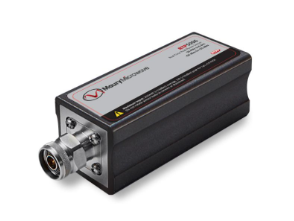
The overall performance of a power meter dependents on the power sensor employed. Maury has a variety of quality power sensors to meet virtually all applications. Maury has a complete line of Peak and Average power sensors up to 40 GHz for all of your fast rise time, wide bandwidth and wide dynamic range applications. In this document, browse through our large variety of advanced sensor solutions.
More Product Information
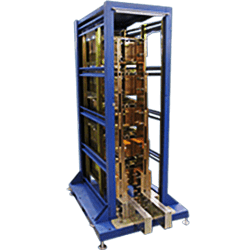
Provides 15,000A DC at 5V DC in current mode
- Single complete package
- Integrated bus bars
- Current mode Analog programming
- Input 400VAC, 220A/ph, Delta
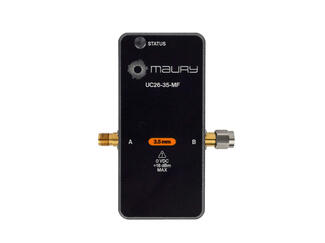
- Speed: Calibration is faster since there is no need to manually connect and disconnect standards.
- Accuracy: Eliminates errors caused by manual handling, such as connector inconsistencies and improper torquing.
- Ease of Use: Minimal user interaction is required, making calibration simpler and more accessible.
- Reliability: Reduces wear and tear on VNA ports and connectors, prolonging their lifespan.
- Consistency: Provides repeatable results across multiple calibration sessions and users.
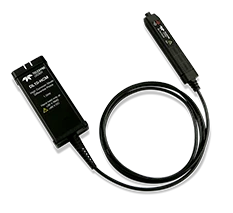
- Ideal probe for up to 48 V power conversion
- 250, 500 MHz and 1 GHz bandwidth
- 80 V dynamic range
- 60 V common mode
- Highest accuracy
- 0.5% gain accuracy
- Precision gain calibration
- Best LF flatness (0.1 dB)
- Lowest noise and highest rejection
- Wide variety of tips
- High performance solder-in
- Browser
- Single pins and header
- Mini and micro grabbers
- Socketed connections
- High temp solder-in
- Y-banana adaptor
- ProBus active probe interface
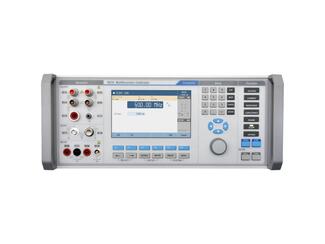
35 ppm AC/DC multifunction calibrator for multimeters, power meters and generally all kinds of electric meters. Implementing modular design, 9010 can be further customized to calibrate oscilloscopes, insulation testers, sources and transducers.
- 35 ppm accuracy
- 400 MHz scope option
- Power quality functions, voltage from current
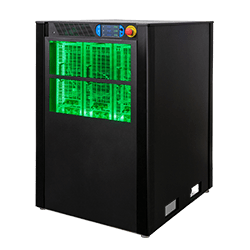
- Dual Voltage ranges that support over-voltage testing on 480V-based systems
- Separate terminal blocks for single-phase and three-phase AC power supply outputs
- High Power AC and DC Source
- Auto paralleling for higher power system expansion
- Single and three-phase modes
- Arbitrary & Harmonic Waveform Generation
- Standard LXI LAN, USB, and RS-232, Optional GPIB
- Step, list, and pulse voltage transients with down to 500usec resolution
- Complete avionics power quality test suites
- 15kVA to 1MVA Power Levels
- Intuitive 5” color display for ease of navigation
- Internationally accepted test routines for EMI/EMC, Safety Compliance
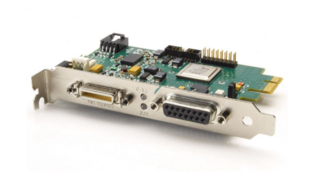
- Image acquisition from Camera Link Base camera
- Supports Camera Link® operations up to 85MHz
- Supports 32/64-bit Windows platforms
- Quarter-length PCI Express x1 Board
- Power Over Camera Link® (PoCL) Compliant
- Offers external acquisition control signals on single PCIe x1 slotROHS compliant
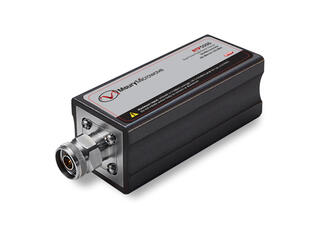
- 6 GHz, 8 GHz, 18 GHz and 40 GHz RF Power Sensors
- Up to 195 MHz video bandwidth with 3 ns rise time
- Real-Time Power ProcessingTM technology with zero measurement dead time
- 100,000 measurements per second
- Power Analyzer Suite advanced measurement and analysis software
- Crest factor, CCDF and statistical measurements
- 10 GS/s effective sample rate
- 100 MS/s continuous sample rate
- Synchronized multi-channel measurements
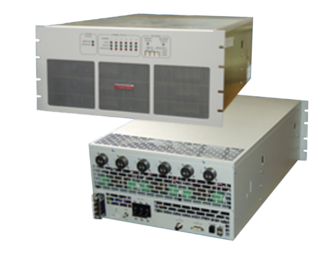
OEM 6 channel DC source
- Single Package 6-Pack of 600W power supplies
- Complete self-contained controller operates independently once pre-set
- Capable of ramps and sequences
- Capable of inter-channel dependent operation
- DeviceNet Interface
- Solid State polarity switching
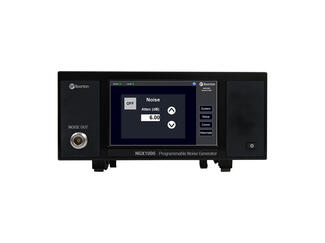
- 5” touch screen display
- Noise output through female N connector
- Ethernet connection for remote control
The NGX1000 programmable noise generator is a high performance, broadband additive white gaussian noise (AWGN) generator in an easy-to-use compact form factor. The streamlined user interface and flat menu structure provides a fast, simple way to add RF noise in a communications system to test reliability, robustness and performance.
All functionality of the generator is accessible through the 5” touch screen or via remote control through an ethernet connection delivering flexible, programmable noise generation for broad use in semiconductor, military, aerospace, satellite, medical and communications applications.

Maury Microwave
Website
Maury Microwave is a pioneering leader in the design and manufacture of precision RF and Microwave calibration, test & measurement, and modeling solutions that are powering global efforts toward a more secure, more connected, future.
Maury Microwave offers Measurement and Modeling Device Characterization Systems and Services including nonlinear passive, active and hybrid-active fundamental and harmonic load pull, non-50Ω X-Parameter modeling, pulsed IV Pulsed s-parameters and compact transistor modeling, and patent-pending ultra-fast/accurate noise parameters.