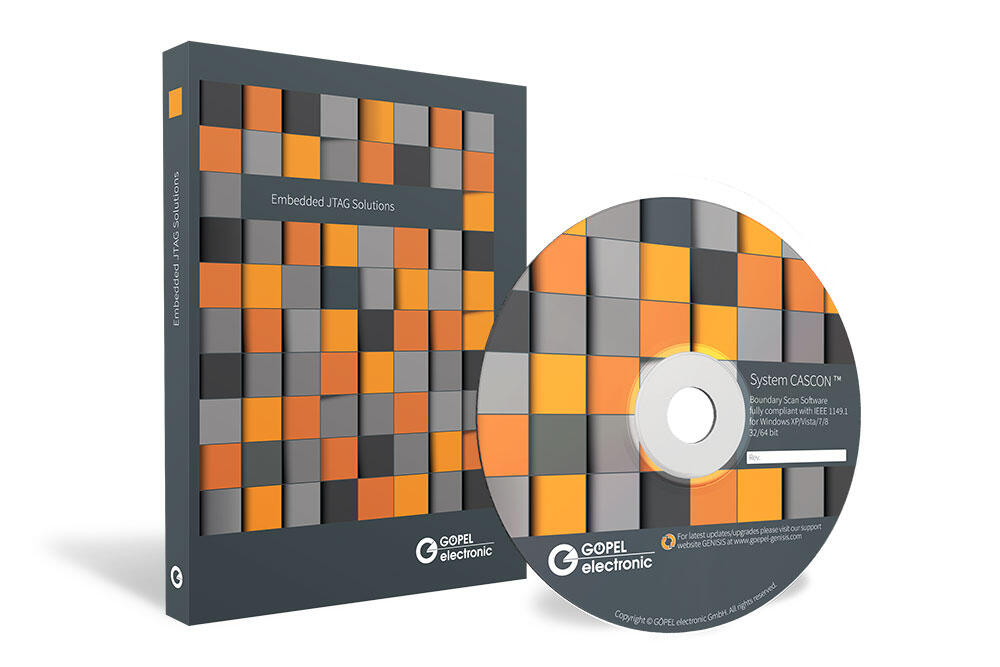
You design the future. We help you make it happen.
Goepel - JTAG Software
- a fully integrated software platform
- maximum productivity due to intelligent tools
- maximum safety for the test vectors
- extended test depth for non-scannable circuitry
- combination of state-of-the-art test and programming strategies
- deep interaction and integration capability for other ATEs
- maximum modularity and scalability
- personalisation of the entire system (myCASCON)
- support during the entire product life cycle
- a portfolio containing more than 100 software tools and edition
The quality of Embedded JTAG Solutions is significantly determined by the performance and architecture of the used software. SYSTEM CASCON™ is a software platform with comprehensive tools for automated test program generation.
Today, the SYSTEM CASCON architecture is available in its fourth generation and is utilised on a global scale. Our development strategy is to secure investments already made by continuous updates and upgrades.
More Product Information
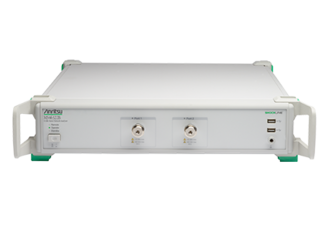
- Guaranteed performance to 43.5 GHz with Extended K™ ports
- Ideal for testing RF and microwave devices, mmWave antennas, and other passive 5G components
- Fast sweep speed and wide dynamic range minimize test times and maximize throughput
- Excellent corrected directivity allows for less measurement uncertainty
- Time domain with time gating option grants easier and faster fault identification
- Industry-standard LAN interface for remote control is more robust than USB and faster than GPIB
- Standard removable hard drive provides additional security for military and government research users
- A common GUI and SCPI interface within the ShockLine family
- USB ports allow for easy connection to user-provided monitor, keyboard, and mouse
- Small 2U package makes for efficient use of rack space
- Universal Fixture Extraction (UFX) software option provides advanced de-embedding tools for test fixture extraction
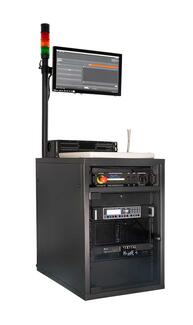
The BARCUDA VP230 is the right system if you are looking for a complete turnkey solution for flexible testing and programming of your electronic assemblies. The stand-alone unit uses the technologies of embedded JTAG solutions such as VarioTAP or ChipVORX. However, you can also expand these to meet the functional test requirements of your electronics production.
With BARCUDA VP230 you can test and program assemblies with or without JTAG/Boundary Scan - with no need to configure a special in-house test system.
With a standard, robust interface "VPC G12 Receiver" from Virginia Panel Corporation (VPC), you can choose the adapter supplier (for needle bed adapters) for contacting your assembly and implement any mechanical requirements.
BARCUDA VP230 is equipped with a complete power-up unit and TAP control for 16 boards, which can be scaled up to 32 boards. It can also be expanded with analogue measurement cards, additional I/O channels and your specific hardware.
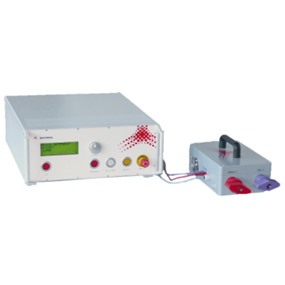
- MIL-STD-1275E Compliant: Dedicated design for conducted susceptibility testing on 28VDC circuits.
- Spike & Surge Testing: Handles spikes up to 260V / 2J and surges up to 200V / 470J.
- High Current Capability: 16A continuous or up to 400A with the optional DM400 decoupling diode module.
- Adjustable Waveforms: Configurable rise times, pulse durations, and voltages for precise test conditions.
- User-Friendly Control: Remote interface via RS232 or USB, with optional control software for automated testing.
Enhance your EMC testing with the PG1275E Pulse Generator—precision, compliance, and versatility combined.
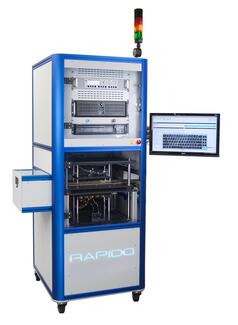
RAPIDO is a multi-site programmer for inline programming and testing.
Are you developing your next electronic assembly and are dealing with "test and programming" concerns?
Your complex boards feature difficult to contact fine-pitch components (e.g. BGA, FPGA) while test and programming still must be efficient?
RAPIDO is an outstanding, "lightning-fast" solution for programming and test using embedded system access (ESA) technologies. Special mechanics ensure precise board contacting from both sides, even for high probe counts.
The system can easily be integrated into a production line, keeping up even with high-volume manufacturing cycle times.
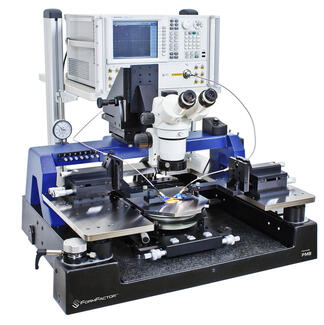
Three Probe Technologies
- Infinity Probe: best for Al (Si)
- ACP Probe: best for AU (III-Vs)
- |Z| Probe: robust solution (long lifetime)
- Precision contact on a wide variety of materials from 26 GHz to 67 GHz
- Accurate results with excellent crosstalk
- Matching cables and substrates included
Precise Contact Solution
- RF chuck ±3 μm surface planarity
- Unique 500 μm platen contact/ separation stroke with ≤± 1 μm accuracy for repeatable contact
- Precision probe alignment
- Consistent contact force and overtravel
- Stable contact performance
WinCal Calibration Software
- Exclusive 1-, 2-, 3-, and 4-port on-wafer calibration algorithms
- Automated calibration monitoring
- Unique measurement & analysis methods
- Accurate S-parameter measurements
- Automatic calibration setup for higher efficiency
- Fast and easy data interpretation and reporting
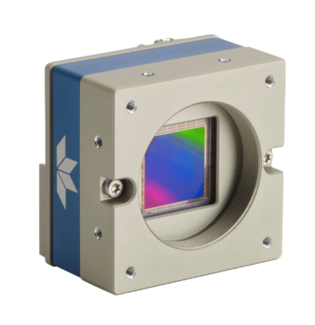
- 10 GigE Ethernet port & hardware
- Industry’s smallest 67M 10GigE Vision camera
- Simplified set-up with field proven Sapera LT software featuring CamExpert
- Engineered to accommodate industrial environment with a ruggedized screw mount RJ-45 connector
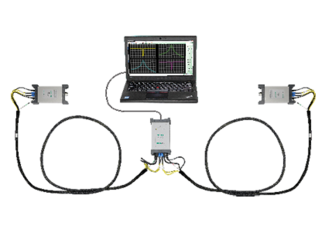
- 2-port VNA with frequency options from 1 MHz to 8 GHz / 20 GHz / 43.5 GHz (options for 20, 50, and 100 meters)
- Extend remote ports 100 meters apart with PhaseLync synchronization
- Small and lightweight ports enable direct connection to DUT eliminating long cable runs
- Guaranteed performance to 43.5 GHz with Extended-K™ ports
- PC control takes advantage of external computer processing power and functionality
- No on-board data storage makes use in secure applications more convenient
- Common ShockLine control software delivers powerful debug and test capabilities
- PhaseLync control module MN25132A
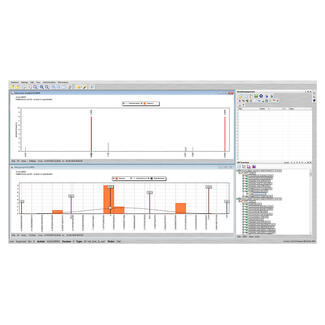
- Test plan development
- Order administration
- Archiving of obtained test results
- Creation of result lists according to the test plans
- Correct and structured filing of test results
- Exceedance of tolerance limits are immediately reported and saved
- Possibility to connect with external measuring devices (please inquire type)
- Connection with a SQL or MS Access© database possible
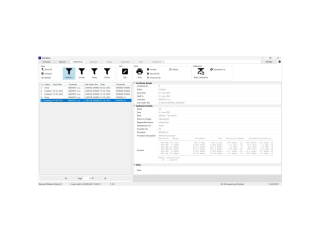
Database software for calibration laboratories. WinQBase keeps track of your instruments, calibrations, customers and other laboratory essentials using inventory records from calibration software CALIBER.
- Complete laboratory database system based on ISO17025
- Role-based access, MySQL system security and backup tools
- Self-hosted server, floating licensing for client apps
- Prints certificates based on MS Office, HTML and many other report templates
Goepel Electronics
Website
With advanced testing and inspection systems for electronic assemblies and printed circuit boards, GÖPEL electronic helps discerning customers from various industry sectors to maintain their commitment to quality.
The company’s wide range of technology provides a basis for finding manufacturing defects at every stage of the product life cycle – from design to end-of-line.