
You design the future. We help you make it happen.
Modular Master Clocks
Products
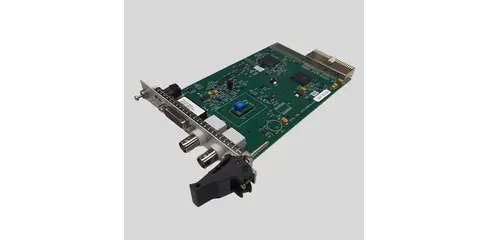
- 32 bit 3U CPCI module
- IRIG B, 1 PPS sync inputs
- GPS sync option (maintains single-slot)
- Have Quick sync input option
- Propagation delay correction
- Zero latency time reads
- Match Time output
- IRIG-B or IRIG-G time code output (Option)
- External Event time tags
- Three user programmable rates
- +3.3V or +5V PCI signaling levels
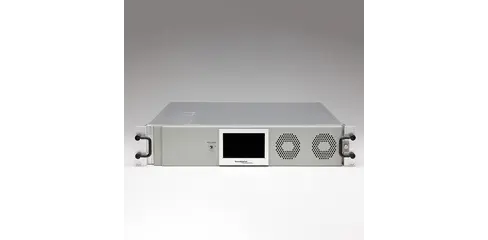
- Redundant design with multiple signal paths built in for high-availability.
- 12 expansion slots in the 2U version and 5 expansion slots in the 1U variant.
- Industry-first GPS integrity checking
- Unique optical crosslink architecture for either Master-Slave hierarchical setups or Master-Master crosschecking and failover
- 2U version is operated by an intuitive touch-screen interface, a first for any master clock system.
- All components are hot-swappable and are dual redundant.
- The Output Signal modules are hot-swappable from the front and minimize the need to disconnect cables.
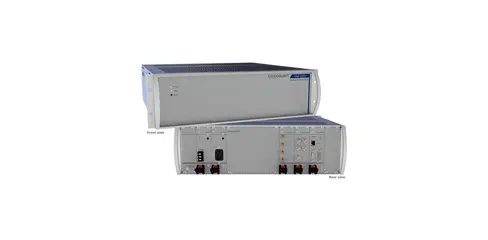
- Uses modern optical pumping instead of older magnetic cesium methods, which improves long-term stability and reliability while measuring many more atoms for highly accurate timing.
- Offers excellent frequency accuracy (≤ ±1×10⁻¹²) and very low phase noise on multiple frequency outputs (5 MHz, 10 MHz, 100 MHz), making it suitable for precise synchronization.
- Supports multiple power options (AC, DC ±24 V, DC −48 V) with redundant and hot-swappable supply modules and optional battery backup for one hour, aiding uptime in critical environments.
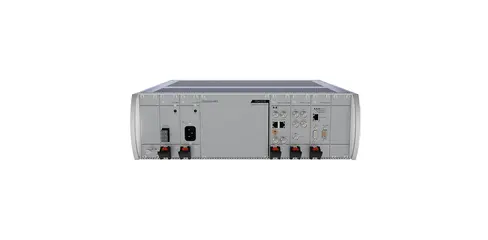
- Uses optical-pumping cesium technology rather than magnetic selection for higher stability and longevity.
- Fully compliant with ITU-T G.811 PRC / G.811.1 ePRC standards.
- Supports essential timing outputs such as BITS, PPS (1PPS), and analog frequency.
- Compact, modular design suitable for deployment in racks, enabling scalable deployment across telecom, defense, utilities, and data-center environments.
- Long service life and improved holdover performance — offering enhanced reliability even during extended GNSS disruptions.
- Remote and secure management capabilities, including support for SNMPv3 and integration with orchestration/management suites (e.g. Mosaic Controller).
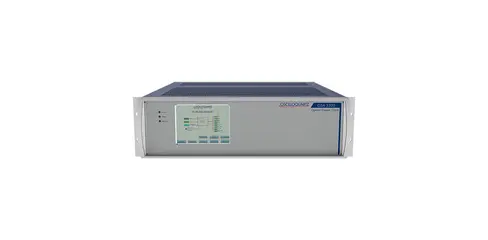
- First commercial high-performance cesium atomic clock using optical pumping — 100 times more atoms can be measured compared to magnetic clocks.
- Offers 10 times higher clock stability.
- Double the operational lifetime compared with traditional magnetic cesium clocks.
- Wide range of ultra-low noise frequency outputs (e.g. 5 MHz, 10 MHz, 100 MHz) — plus multiple 1PPS outputs, supporting high-precision timing distribution.
- Frequency accuracy ≤ ±5 × 10⁻¹³; reproducibility after power cycle ≤ ±1 × 10⁻¹³.
- Adjustable frequency offset: resolution ±1 × 10⁻¹⁵, range ±1 × 10⁻⁹.
- Rack-mount (3RU, 19″)
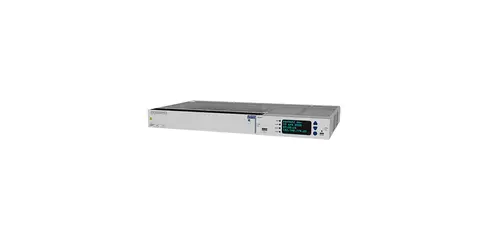
- Ultra-long Holdover with improved ePRTC algorithm to provide up to 100 days of holdover within 100ns
- Jamming, spoofing detection
- High Accuracy White Rabbit PTP allowing sub-nanosecond time synchronization achievable through firmware upgrade, no additional hardware required
- 4x 10MHz Low Phase Noise (LPN)
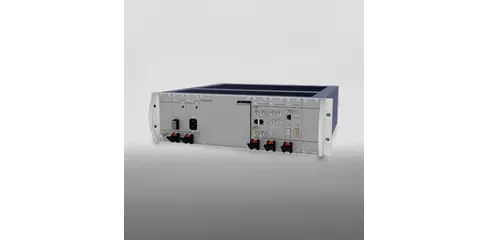
- OSA 3350 Cesium is the market’s first primary reference clock to utilize industry leading optical pumping technology
- Superior short-term and long-term stability compared to magnetic cesium
- Capable of 100 nanoseconds of holdover for a minimum of 30 days
- Compact, 3U 19” rackmount form-factor
- Guaranteed 10-year minimum life expectancy
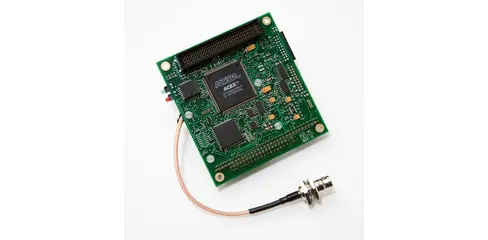
- IRIG’s A and B and NASA 36 time code inputs
- +3.3V or +5V signalling
- 1PPS Sync input
- External Event (Time Tag) input
- Three programmable pulse rate outputs
- Match Time output
- Industrial Temperature Range option
- Optional on-board GPS option
- Optional HaveQuick input/output
- Optional IRIG B time code output
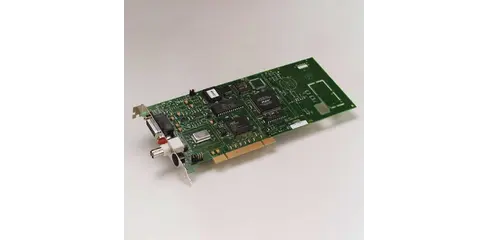
- 3/4 length board (1/2 size available w/o GPS input)
- Optional Have Quick synchronization input
- IRIG’s A and B and NASA 36 time code inputs
- 1PPS sync input
- IRIG B output option
- 1PPS and time code inputs are redundant
- Single-slot including GPS option
- Zero latency time reads
- External Event input (optional eight or sixteen inputs)
- Match Time output
- Programmable Heartbeat rate