You design the future. We help you make it happen.
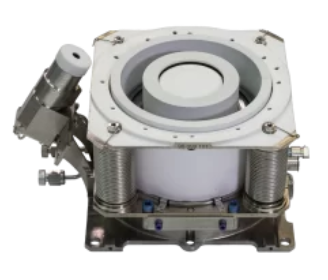
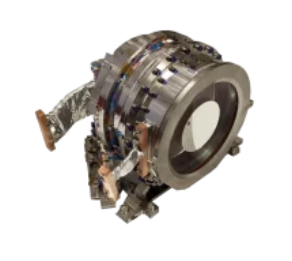
Safran DSI - EPS®1350 Electric Propulsion System
- Designed for Orbit-Topping and Station-Keeping
- 40% Weight Saving Convention Propulsion
- Excellent Thrust-to-Electrical Power Ratio
The EPS®1350 satellite propulsion system draws on Safran’s long experience with electric propulsion. It is designed for orbital transfer, station keeping and deorbiting satellites and other spacecraft. In particular, the EPS®1350 was the primary engine on ESA’s lunar probe, Smart-1, launched in 2003 by an Ariane 5 rocket. This mission was completed in September 2006.
Very High Performance
The major advantage of the EPS®1350 is of course its very high specific impulse, which allows significant weight savings versus platforms using conventional chemical propulsion. It also offers an excellent thrust-to-electrical power ratio, which enables reducing operating time or the number of thrusters needed.
In-Orbit Experience
The EPS®1350 amply demonstrated its capabilities during ESA’s Smart-1 probe’s mission from Earth orbit into orbit around the Moon: 5,000 hours cumulated operating time in space Four of these thrusters handle North/South station-keeping duties on the Alphasat satellite, launched in 2013. The EPS®1350 was selected by Space Systems Loral in 2016 and will be used on the company’s communications satellites for station-keeping, and for part of the orbit-topping operation.
More Product Information
- Easy-to-Install Windows 10 Utility
- User-Friendly Menu-Driven Operation: MIL-STD-1553B (MT/RT< ARINC429, RS422
- ARINC-717 Compliant
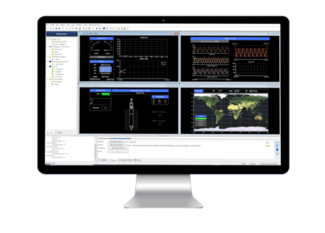
- Complete System Software Suite: Configuration, Monitoring, Decommutation, Processing and Visualization
- Extended Configuration Flexibility: End-to-End System from Data Acquisition Units to Data Visualization & Analysis
- Integrated Telemetry Outputs: Compliant with IRIG 106, Chapter 4, 7/10, IENA and DAR Network Standards
- Simple Data Management: Data availability managed at high-level for one-click modification of data streams
- Full Spectrum of Interfaces: 10GigE, Video, Fiber Channel, ARINC 429, PCM, MIL-STD-1553, H.265 Video, Analog...
- Enhanced Productivity: Capture efficiently your needs and let the automated features propose you the best configuration settings
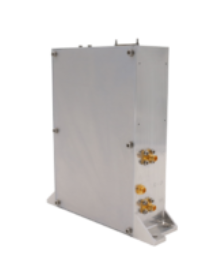
- Compact Design: Ideal for mini and micro satellites
- Long Lifetime: 7 year-lifetime in Low Earth Orbit missions
- COTS Design: Radiation tested and hardened, ITAR free
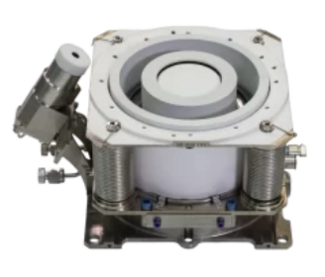
- Designed for Orbit-Topping and Station-Keeping
- 40% Weight Saving Convention Propulsion
- Excellent Thrust-to-Electrical Power Ratio
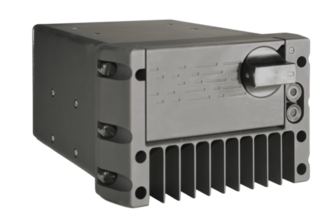
- File Server Capability: User-Defined Media Partitioning
- Qualified for Hard Environment: DO-160, MIL-STD-704, -461, -810
- Designed to Minimize Obsolescence Risk & Management: FPGA-Based Design
- High-Definition Video, Processing & Recording: VESA, HD-SD, DVI
- High-Capacity Rugged Removable Cartridge: 64TB to 2TB
- Databus: MIL-STD-1553B (MT/RT, ARINC429, RS422
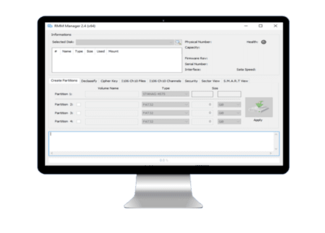
- Easy-to-Install Windows 10 Utility
- User-Friendly Menu-Driven Operation: MILSTD-1553B (MT/RT), ARINC429, RS422
- ARINC-717 Compliant
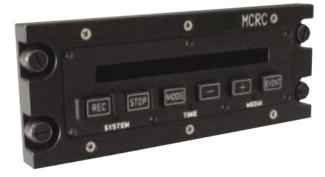
- Qualified for Harsh Environments: DO-160, MIL-STD-701, -461, -810
- Designed to Minimize Obsolescence Risk & Management: FPGA-Based Design
- Extremely Low Space Requirements: 5.7 x 2.2 x 1.97' / 1,54 lb
- Remote Control of the Mission Recorder
- Standard Installation - Easy to Handle
- Compatible with the Mission Recorder Series
- Ultra-Low Swap: Saving launch and operational costs
- Wide FOV (Field of View): 6.3° x 4.3° / 54 x 36 km2 from a 500km orbit
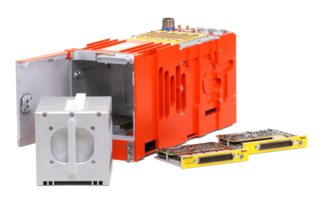
- Ultra-High Data Rate and Storage Capacity: Up to 16 Gbit/s and up to 64 TB
- Advanced Data Capabilities: On-Board Data Analysis
- Extended Configuration Flexibility: User-Configuration Canister Concept
- Integrated Telemetry Outputs: IRIG 106 Chapter 7 Support
- Full Spectrum of Interfaces: 10GigE, Video, Fiber Channel, ARINC 429, PCM, MIL-STD-1553, H.265 Video, Analog…
- Cybersecurity: Data-At-Rest Capabilities (encryption key management), Removable Secure Operational Disk (for extraction of non-volatile memory from system)
Safran DSI
Safran DSI Testing & Telemetry provides complete, end-to-end solutions covering instrumentation, mission systems, onboard recording, and transmission, through to base stations for data monitoring and control. Our solutions are platform-agnostic and adaptable to customer mission needs.